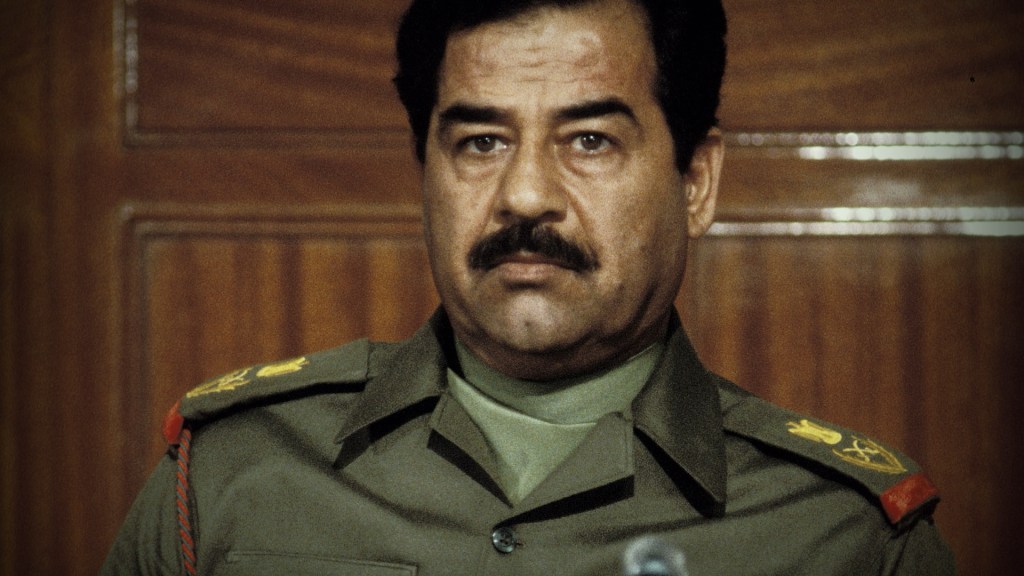
History is filled with leaders whose ambitions exceeded their ability to assess reality. Saddam Hussein’s decision to invade Kuwait in 1990 was a textbook case of strategic miscalculation—rooted in personal grievances, economic desperation, and an overestimation of his own power. Instead of carefully analyzing the global landscape, Saddam acted on impulse, believing that force would resolve Iraq’s financial woes and elevate his status in the region. His failure to anticipate the swift and unified response of the international community, particularly the United States, highlights the dangers of a leader who allows personal emotions to dictate strategic decisions. As Sun Tzu warns, a general who is easily angered and hasty to act can be manipulated into ruin. Saddam’s invasion of Kuwait not only failed to achieve his objectives but ultimately weakened Iraq and set the stage for his eventual downfall.
In the aftermath of the Iran-Iraq War, Saddam Hussein’s Iraq faced severe economic challenges. He owed massive debts primarily to the Sunni Arab Gulf countries who refused to forgive them, despite Saddam’s claims of defending those states from the new Shia Islamist regime in Iran (he started a fight they didn’t ask for). Making matters worse, oil prices were too low for him to use Iraq’s abundant oil reserves to pay the debts while rebuilding his bruised military. Unwilling to make personal sacrifice and seeing no other way out of his predicament he turned to the one language he knew best: force.[1]
By invading and seizing Kuwait Saddam would simultaneously rid himself of his financial obligation to the tiny state, use its oil reserves to rebuild his finances, and become one of the largest oil producing states in the world- drastically magnifying his power. There was one significant problem with Saddam’s logic: he drastically underestimated the world’s, namely the United States’, response. Setting aside the debate over Ambassador Glaspie’s reply to Saddam when she was asked what the US’s position would be regarding the Iraq and Kuwait’s territorial dispute (we’ll cover that debate when discussing diplomacy in a future essay), he did not expect the world to eject him and take away his prize. And then when it became clear his occupation would be contested he drastically overestimated his army’s ability to put up a fight. Saddam should have spent more time studying Sun Tzu than Joseph Stalin.[2]
Sun Tzu says, “Thus generals have five dangerous (character traits): One committed to dying can be slain; one committed to living can be captured; one (easily) angered and hasty (to act) can be insulted; one obsessed with being scrupulous and untainted can be shamed; and one who loved the people can be troubled.” Followed by, “Now these five dangerous traits are excesses in a general, potential disaster for employing the army. The army’s destruction and the general’s death will invariably stem from these five, so they must be investigated.” [3]
A leader committed to dying will be reckless with his decisions and thus with their army, while one committed to living will act too timidly or hesitate to strike at the most opportune moment and is vulnerable to attack. The quick-tempered leader can be lured into dangerous situations via insults or offenses. Conversely, the leader fanatical about their honor and principle can also be lured into dangerous situations, but through disgrace or shame. Finally, the leader obsessed with protecting the people can hasten their army’s demise by blindly rushing to their peoples’ rescue. Saddam was easily angered and hasty to act.
Saddam Hussein’s offense at not having his loans forgiven and then hastily jumping at the option to invade Kuwait was based on a reality that he created in his mind vs what was true. Freedom sites a psychological profile created for the US congress in 1990 identifying Hussein as, “neither irrational nor unpredictable,” but instead a, “judicious political calculator,” “shrewdly manipulative,” and “at heart a survivor.” His problem was that he created his own reality based on what he wished to be true.[4] Due to his skewed reality he saw offense where there was none to be had and convinced himself of success when all evidence pointed towards folly. If Saddam had followed Sun Tzu’s advice it is entirely possible Iraq would be a very different place today.
Sun Tzu identifies his traits of a good leader. Sun Tzu said, “It is essential for a general to be tranquil and obscure upright and self-disciplined (i), and able to stupefy the eyes and ears of the officers and troops, keeping them ignorant (ii). He alters his management of affairs and changes his strategies to keep other people from recognizing them. He shifts his position and traverses indirect routes to keep other people from being able to anticipate him.”[5] For this essay’s purpose we’re focused on the first sentence.
“It is essential for a general to be tranquil and obscure upright and self-disciplined,” Sun Tzu said. Saddam was none of these things. He lacked the calmness, respectability, and self-discipline to properly analyze and orient his thinking to the situation Iraq faced after the Iran-Iraq war. He properly identified his financial situation and knew something needed to be done to address that problem, but his myopic view towards security, specifically his own, led him down the path of rebuilding his armed forces first and foremost. He ignored the fact that the Iraqi armed forces was still one of the largest armies in the world.[6]
After the invasion and annexation of Kuwait, his singular view of rebuilding his finances in order to rebuild his army instead of focusing on Iraqi society lead to the exact opposite of what he set out to do. Even when it became clear that the coalition created to oust him from Kuwait was not going to back down he still chose to fight. The alternative in his mind, that backing down would weaken his hold on power, was unacceptable to him. It did not matter how many of his soldiers were killed, his power was most important.
Saddam Hussein’s invasion of Kuwait serves as a cautionary tale of strategic blindness. His miscalculation was not simply a military failure but a failure of leadership. He ignored Sun Tzu’s advice that a great general must be disciplined, adaptable, and emotionally restrained. Instead, he allowed his personal grievances and illusions to shape his strategy, leading to catastrophe for both himself and his nation. His inability to acknowledge reality led him to overestimate Iraq’s military strength and underestimate the resolve of his enemies. In the end, his reckless pursuit of power did not strengthen Iraq—it led to economic devastation, military defeat, and his eventual removal from power. If history has taught us anything, it is that leaders who fail to analyze their environment with clarity and discipline are doomed to destruction.
[1] Freedman, Lawrence. Command: The Politics of Military Operations from Korea to Ukraine. New York: Oxford University Press, 2022. p. 259
[2] Ibid. p. 259-265
[3] Ralph D. Sawyer, trans., The Art of War (New York: Basic Books, 1994), p. 204
[4] Freedman, p 252.
[5] Sawyer, p. 222.
[6] “Iraqis Say They Won’t Leave Kuwait Unless Israel Quits Arab Lands,” Los Angeles Times, August 13, 1990, https://www.latimes.com/archives/la-xpm-1990-08-13-mn-465-story.html.
 Strategy in Brief
Leave a comment