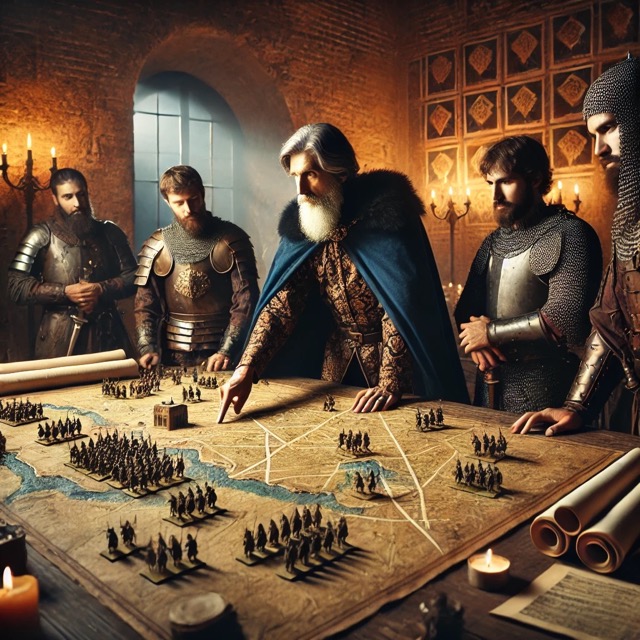
Imagine a state lead by a person who never reads. A person who never thinks long or contemplative on issues, domestic or international. An individual who never pays attention during their intelligence briefings or to briefings from generals tasked with developing war plans. Or imagine a leader who has so cowed the military generals and intelligence agency heads that they do not dare give information that does not match the leader’s preferred narrative. Now, imagine being a member of that leader’s armed forces, deployed near a neighboring state with your brothers and sisters in arms, waiting for the order to cross the border and invade. How much faith would you have in surviving that war?
The first theme we’ll cover is command specifically, analysis and leadership. Since it was the first idea Sun Tzu focused on today we too focus on analysis. Sun Tzu says, “Warfare is the greatest affair of state, the basis of life and death, the Way, to survival or extinction. It must be thoroughly pondered and analyzed.”[1]
Sawyer reminds readers that warfare had changed by Sun Tzu’s time from small-scale conflicts to large-scale battles that can endanger the existence of a state.[2] Therefore, a state’s leader had to be very careful when committing troops to field. A leader who does not properly understand themselves, their state, their armed force, and those of their enemy does not know if they will win or lose. That leader is gambling with the lives of their military, their citizens, and potentially the existence of the state itself.
Think of the difference between someone who invests in the stock market and someone who throws money at the latest fad stock hoping to get rich quick. Technically, we’d refer to both of them as investors, but one of them is truly investing and the other is simply gambling. What is the difference between them? One is acting on the knowledge and wisdom they have gained from analyzing companies and the economy while the other is simply hoping everything goes right. As one of my former leaders liked to remind people- hope is not a course of action (COA).
Now, the investor can still make mistakes and lose their money and the gambler can always win. The difference is in one of timing and increasing the likelihood of success. The investor is using knowledge and wisdom to set themselves up for success before the ‘action’ begins. They use that knowledge to determine what companies to invest in and which to avoid increasing their likelihood of success. The gambler has no clue of their success until after the action ends and by then there may not be anything left to salvage.
The same is true for our leader above. They will not know of their success or failure until the conflict is over. Instead, if that leader analyzed the geopolitics between various factor states, the likely fields of battle, the state and readiness of their military among many other factors and then finding the best way to field those forces, then that leader has drastically increased the likelihood of success before the conflict begins. Assuming that leader even needed to field forces at all.
A good commander or leader fights their battles before the battle has even begun. They do that through a thorough analysis of a situation and a good leader will never field their armed forces without it. I’ve been reading about strategy for years now and one thing I’ve begun to notice over and over is the intersection of good leadership and good strategy. Both of which begin with good analysis.
Next week we’ll discuss the other half of the command theme, what Sun Tzu says are the necessary qualities of good leaders.
[1] Ralph D. Sawyer, trans., The Art of War (New York: Basic Books, 1994), p. 167
[2] Sawyer p. 128
 Strategy in Brief
Leave a comment